
Introduction
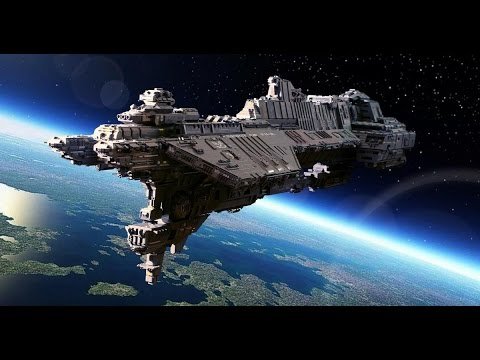
Interstellar travel is crewed or uncrewed travel between stars or planetary systems. Interstellar travel would be much more difficult than interplanetary spaceflight. Whereas the distances between the planetsin the Solar System are less than 30 astronomical units (AU), the distances between stars are typically hundreds of thousands of AU, and usually expressed in light-years. Because of the vastness of those distances, practical interstellar travel based on known physics would need to occur at a high percentage of the speed of light, allowing for significant travel times, at least decades to perhaps millennia or longer.
What do we know…
The speeds required for interstellar travel in a human lifetime far exceed what current methods of spacecraft propulsion can provide. Even with a hypothetically perfectly efficient propulsion system, the kinetic energy corresponding to those speeds is enormous by today’s standards of energy development. Moreover, collisions by the spacecraft with cosmic dust and gas can produce very dangerous effects both to passengers and the spacecraft itself.
A number of strategies have been proposed to deal with these problems, ranging from giant arks that would carry entire societies and ecosystems, to microscopic space probes. Many different spacecraft propulsion systems have been proposed to give spacecraft the required speeds, including nuclear propulsion, beam-powered propulsion, and methods based on speculative physics.
For both crewed and uncrewed interstellar travel, considerable technological and economic challenges need to be met. Even the most optimistic views about interstellar travel see it as only being feasible decades from now. However, in spite of the challenges, if or when interstellar travel is realized, a wide range of scientific benefits is expected.
Required energy
A significant factor contributing to the difficulty is the energy that must be supplied to obtain a reasonable travel time. A lower bound for the required energy is the kinetic energy {\displaystyle K={\tfrac {1}{2}}mv^{2}} where {\displaystyle m} is the final mass. If deceleration on arrival is desired and cannot be achieved by any means other than the engines of the ship, then the lower bound for the required energy is doubled to {\displaystyle mv^{2}}.
The velocity for a manned round trip of a few decades to even the nearest star is several thousand times greater than those of present space vehicles. This means that due to the {\displaystyle v^{2}} term in the kinetic energy formula, millions of times as much energy is required. Accelerating one ton to one-tenth of the speed of light requires at least 450 petajoules or 4.50×10¹⁷ joules or 125 terawatt-hours (world energy consumption 2008 was 143,851 terawatt-hours),without factoring in efficiency of the propulsion mechanism. This energy has to be generated onboard from stored fuel, harvested from the interstellar medium, or projected over immense distances.
Hopes for the future…
NASA has been researching interstellar travel since its formation, translating important foreign language papers and conducting early studies on applying fusion propulsion, in the 1960s, and laser propulsion, in the 1970s, to interstellar travel.
The NASA Breakthrough Propulsion Physics Program (terminated in FY 2003 after a 6-year, $1.2-million study, because “No breakthroughs appear imminent.”)identified some breakthroughs that are needed for interstellar travel to be possible.
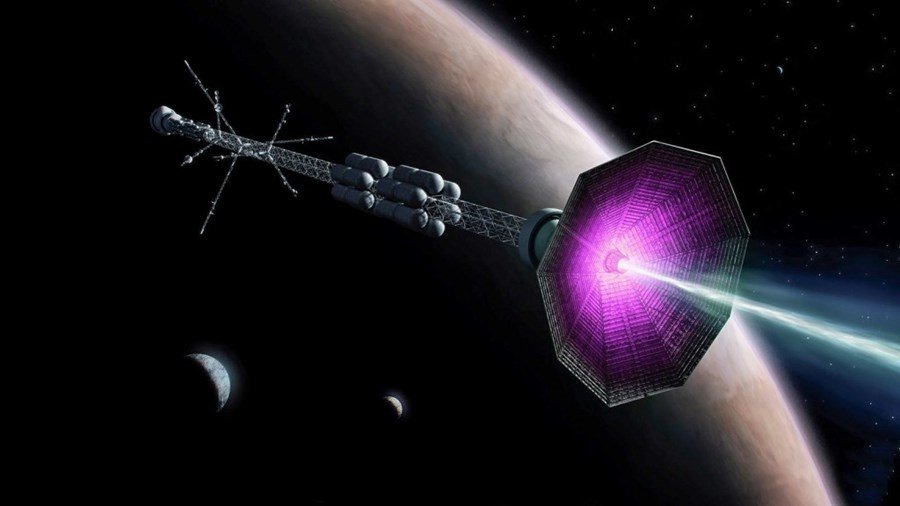
Geoffrey A. Landis of NASA’s Glenn Research Center states that a laser-powered interstellar sail ship could possibly be launched within 50 years, using new methods of space travel. “I think that ultimately we’re going to do it, it’s just a question of when and who,” Landis said in an interview. Rockets are too slow to send humans on interstellar missions. Instead, he envisions interstellar craft with extensive sails, propelled by laser light to about one-tenth the speed of light. It would take such a ship about 43 years to reach Alpha Centauri if it passed through the system without stopping. Slowing down to stop at Alpha Centauri could increase the trip to 100 years,whereas a journey without slowing down raises the issue of making sufficiently accurate and useful observations and measurements during a fly-by.
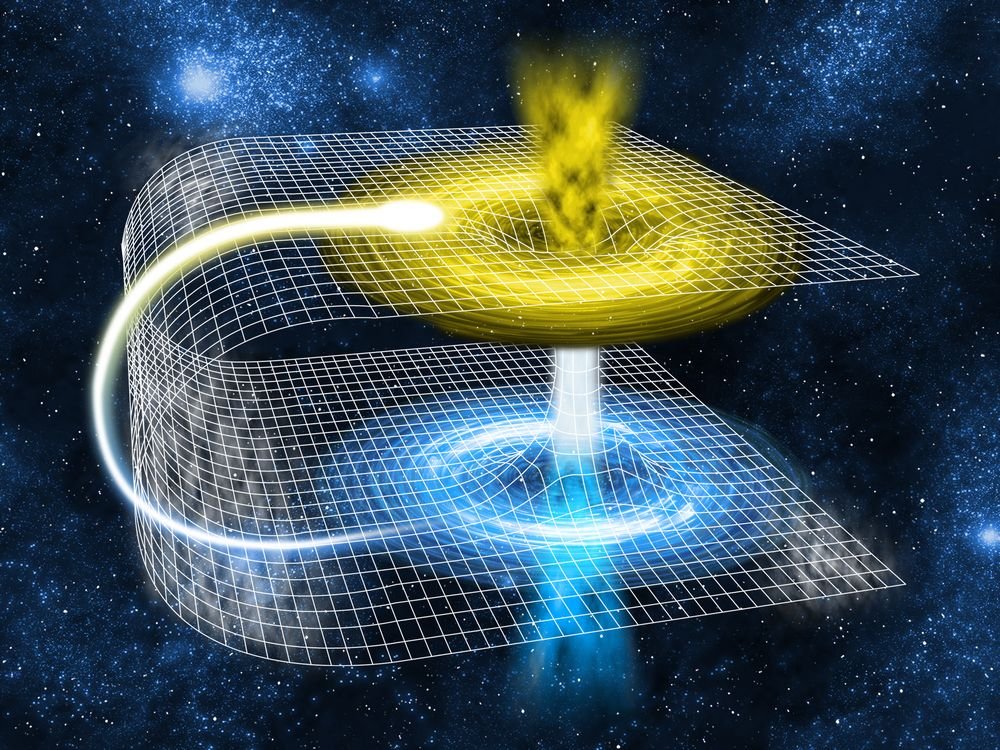
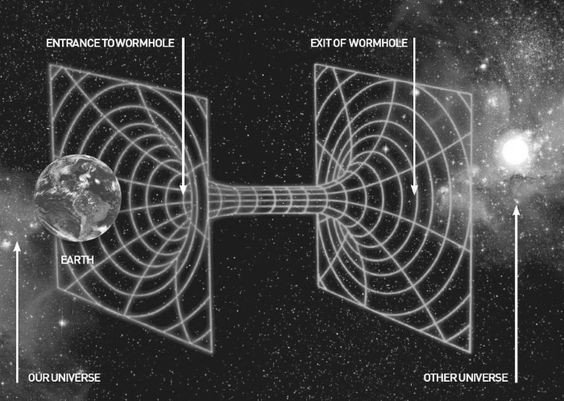
A theoretical method to travel between two galaxies is to travel through a Wormhole. A wormhole (or Einstein–Rosen bridge or Einstein–Rosen wormhole) is a speculative structure linking disparate points in spacetime, and is based on a special solution of the Einstein field equations. A wormhole can be visualized as a tunnel with two ends at separate points in spacetime (i.e., different locations, or different points in time, or both.)
Contact information
Name: Yuvraj Singh Chauhan
Roll. No: 20191CSE0718
Class: PC18
Presidency University Bengaluru
 Stellar